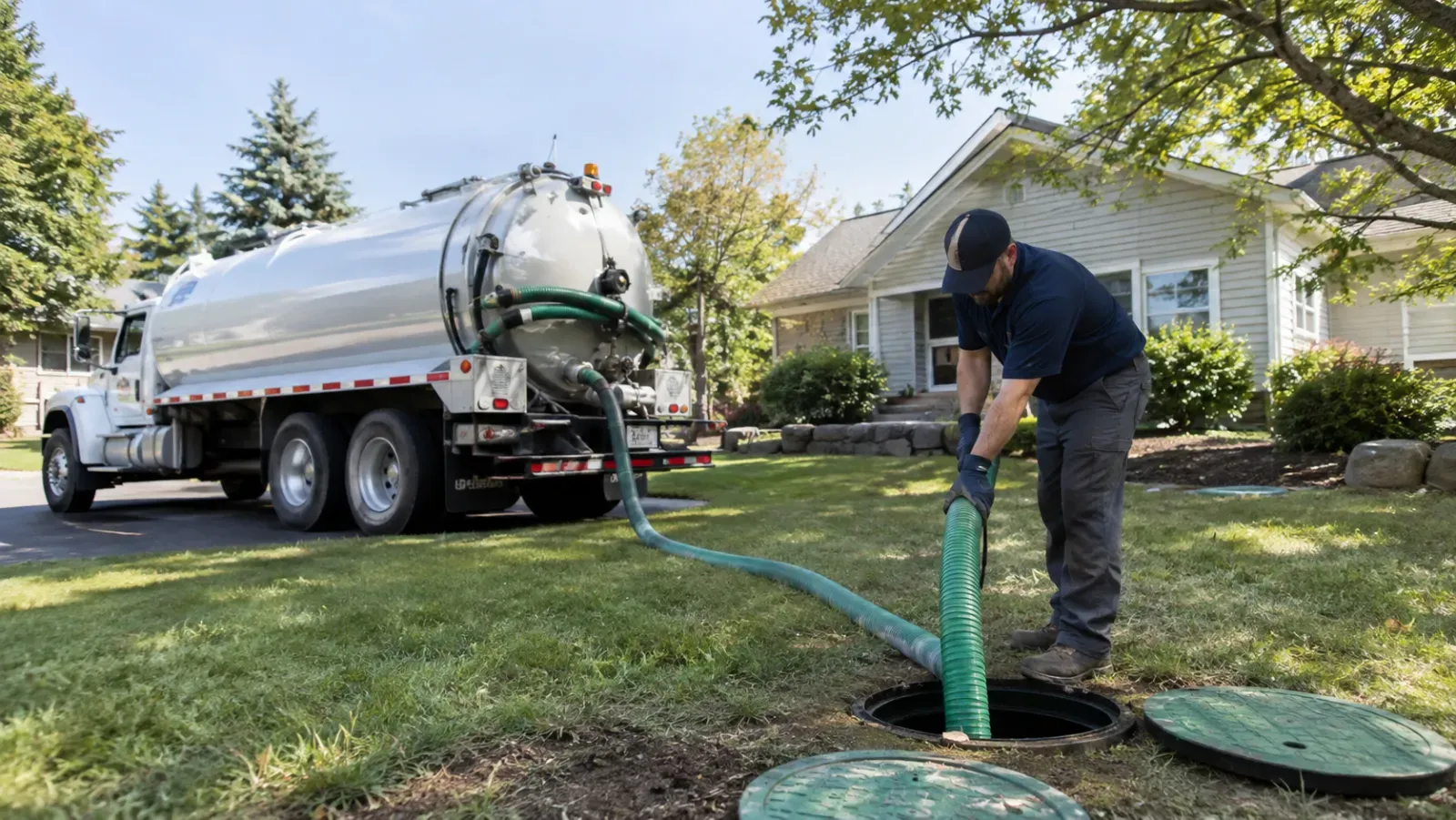
Septic Tank Pumping & Repair in Hamilton, OH
We pump tanks, repair systems, install replacements, and fix drain fields for homes in Hamilton and across Butler County. Whether drains are slowing, the yard is soggy over the leach field, or you simply cannot remember the last pump-out, call and we will get it on the schedule.
Serving Hamilton, Middletown, Trenton, Oxford & nearby Butler County townships
Septic services for Hamilton and Butler County
Homes outside city sewer lines rely on a tank, baffles, and a drain field to treat wastewater on site. When solids build up, a baffle fails, or the drain field stops absorbing, the whole house feels it. We handle the core septic jobs Butler County homeowners call about most: pumping and cleaning, tank and line repair, full system installation or replacement, and drain field repair.
Septic tank pumping & cleaning
Regular pumping keeps solids from pushing into the drain field. We empty and clean tanks for homes across Hamilton and Butler County.
Septic tank repair
Slow drains, odors, and backups often mean a tank or line problem. We diagnose and fix systems when something stops working the way it should.
Septic system installation & replacement
New builds and failed systems need a full install. We handle installations and replacements when the old tank is done.
Drain field repair
Soggy ground or an unusually green patch over the leach field usually points to a failing drain field. We repair and replace leach fields for Butler County homes.
What are you noticing at your house?
Septic problems rarely start with a dramatic backup. More often you notice a few quiet clues first: drains that take longer than they used to, a smell near the lids after a rainy week, or a soft spot over the leach field. Pick the sign that matches what you see—each one opens the service page that usually fits, so you can call with a clearer request.
Slow drains throughout the house
Often means the tank is full or the outlet is restricted. Start with pumping and cleaning.
See septic tank pumping →
Sewage odor inside or near the tank
Can be a full tank, a venting problem, or a damaged lid or baffle. Pumping or tank repair is the usual next step.
See septic repair →
Soggy ground or a green patch over the field
Usually means the drain field is not absorbing. That is a leach field problem, not just a full tank.
See drain field repair →
Backups in toilets or floor drains
Full tank or a blocked line. Call right away so the crew can sort pumping from a line or field issue.
Call 513-450-3182 →
Cannot remember the last pumping
Solids may already be building toward the drain field. A scheduled pump-out is the safe default.
Schedule pumping →
Buying or selling a Butler County home
A septic inspection checks the tank, baffles, lines, and field before the deal closes.
See septic inspection →
How often to pump a septic tank in Butler County
The US EPA says a household septic system should generally be inspected at least every three years, and household tanks are typically pumped every three to five years. Systems with electrical float switches, pumps, or mechanical parts, such as aerobic units, need more frequent checks, generally once a year.
In Ohio, your system's operation permit can set its own maintenance frequency. If it does, follow the permit. Keep pumping receipts in case the Butler County General Health District asks for proof of maintenance. Household size, tank size, and how much grease and solids go down the drains all change how fast a tank fills.
If you cannot remember the last pump-out, treat that as a reason to schedule one. Waiting until drains slow or sewage odors show up often means solids have already moved closer to the outlet baffle and the drain field. Read more in our guide:how often to pump a septic tank in Ohio.
Heavy rain and wet ground in Butler County
After a stretch of rain, the soil around a drain field can stay saturated. Saturated soil cannot accept and treat wastewater as well as drier ground, so slow plumbing, wet spots in the yard, or a backup can show up even when the tank was pumped on schedule.
The US EPA warns that pumping a septic tank while the surrounding soil is flooded or saturated can damage the tank or its pipes. If the yard is standing water or the ground is soft over the field, call first and describe the conditions before anyone opens the lids. Cutting back on laundry, showers, and dishwasher runs for a day or two reduces how much water the field has to handle while the ground drains.
When you call, share the last pump date if you know it, how many people live in the house, what you are seeing, and whether heavy rain hit the property. That helps separate a routine pump-out from adrain fieldortank repairvisit. Official EPA septic guidance:How to Care for Your Septic System.
What to expect on a septic service visit
Most visits start with locating the lids, opening the tank, and pumping out the liquid, scum, and settled solids. While the tank is open, it is the right time to look at the inlet and outlet baffles and note anything that needs repair. You should leave knowing what was done and what to watch for next.
If the call is about soggy ground, odors over the leach field, or repeated backups after a recent pump-out, the visit may focus more on the drain field and distribution than on a routine clean-out alone. Repair and replacement work follows the scope that fits the problem, and permit questions in Butler County go through the Butler County General Health District when the job requires it. OurButler County septic guideslink to the official sources for permits, operation permits, and records.
Bring the property address and anything you know about the last service date. If you do not know where the lids are, say so when you call. Finding them is a normal part of the job.
From phone call to finished job
Call or request service.
Tell us what you're seeing and where the property is.
We schedule a visit.
We'll get you on the calendar.
The crew does the work and walks you through it.
You'll know what was done and what to watch for.
Service area: Hamilton and Butler County
We work with homeowners in Hamilton and the surrounding Butler County communities. Most of our septic work is outside the city sewer lines, in the townships and rural edges where a tank and drain field still handle the house.
That includes Middletown, Trenton, Oxford, and township areas such as Fairfield Township, Ross Township, and Hanover Township, along with the other Butler County communities listed below. If your street is on municipal sewer inside a city, septic service usually does not apply. If you are on a tank, we can help.
Butler County septic guides
Permits, operation permits, records, and selling a home with a septic system, with links to the official Butler County and Ohio sources.
What to have ready
- The property address
- When the tank was last pumped, if you know
- What you're noticing and when it started
- Where the tank lid is, if you know (it's fine if you don't)
Hamilton septic FAQ
How often should a septic tank be pumped in Butler County?
The US EPA says household septic tanks are typically pumped every three to five years, and systems should generally be inspected at least every three years. In Ohio, your operation permit can set its own maintenance schedule. Follow the permit, and keep pumping receipts for the Butler County General Health District. See our guide on how often to pump a septic tank in Ohio for more detail.
What are signs I need septic tank pumping?
Slow drains throughout the house, sewage odors near the tank or inside, backups in toilets or floor drains, and not remembering the last pump-out are common reasons to schedule pumping. Soggy ground or an unusually green patch over the drain field often points to a drain field problem instead of, or in addition to, a full tank.
Do you serve areas outside Hamilton city limits?
Yes. Most of our septic work is outside city sewer lines, in the townships and rural edges around Hamilton, Middletown, Trenton, Oxford, and nearby Butler County communities listed on this site.
What should I have ready when I call?
The property address, when the tank was last pumped if you know, what you are noticing and when it started, and where the tank lid is if you know. It is fine if you do not know the lid location.
Is an operation permit required in Butler County?
Ohio rules require a valid operation permit to run a household sewage treatment system, and the owner must follow the permit terms. In Butler County, the Butler County General Health District issues and tracks these permits. Our operation-permit guide explains the basics and links to official sources.
Get your septic system taken care of
What happens next
- We call you back
- We schedule a visit
- The crew handles the work.