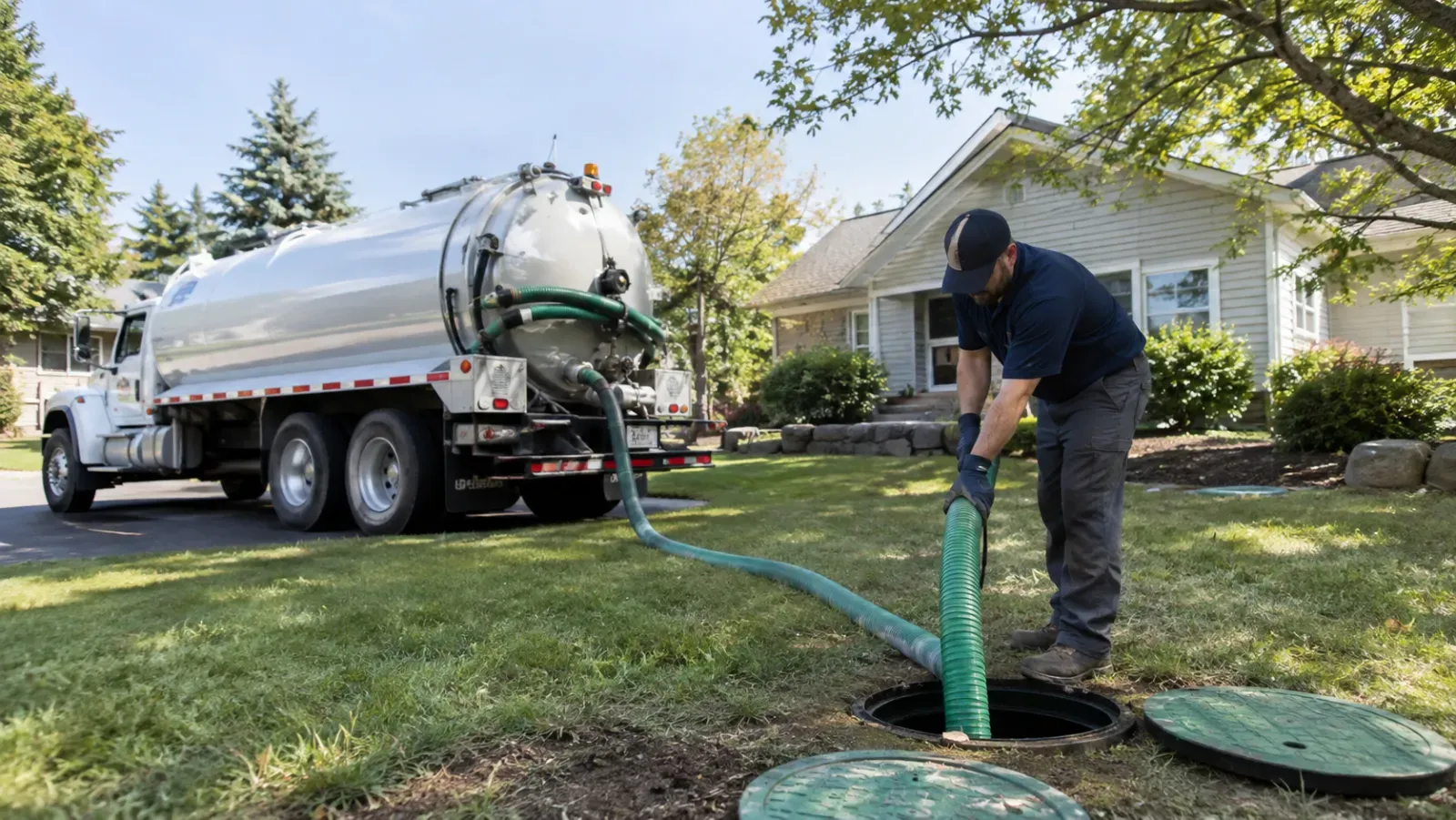
Septic tank pumping and cleaning in Hamilton, Ohio
Hamilton Ohio Septic pumps and cleans septic tanks for homes in Hamilton and across Butler County. Solids settle as sludge. Grease and lighter waste float as scum. When either layer builds too high, solids can push toward the outlet and load the drain field. A full pump-out empties the tank so it can work again. We cover Hamilton, Fairfield, Middletown, Trenton, Oxford, Fairfield Township, Ross Township, and Hanover Township. Slow drains, sewage smell near the tank, or you cannot remember the last cleaning? Book a visit. Call or send a short note and we will put it on the calendar.
What septic tank cleaning and pumping includes
We find the tank access, open the lids, and pump until the tank is empty. We remove the liquid, the floating scum, and the settled solids. We do not stop at a quick skim of the top. Where we can reach, we clean leftover buildup so you get capacity back.
Waste goes into the truck and leaves for disposal. Lids go back on. You can use water as usual when we wrap up. If we see damage, a blocked outlet, or anything that looks bigger than a routine clean, we tell you straight so you can decide on next steps, including septic tank repair when a fix is needed.
Step-by-step: how a pump-out works
- Locate the tank and clear access to the lids
- Inspect the ground around the lids before opening
- Open the lids and look at liquid level, baffles, and obvious damage
- Pump out liquid, scum, and settled solids until the tank is empty
- Note anything that needs repair, then close and secure the lids
- Leave waste for proper disposal off site
If you already know the lids are buried, mark what you can. If you do not know where the tank is, that is common—we locate it as part of the visit.
Signs it is time to pump or clean
- Slow drains in more than one fixture
- Sewage odor near the tank or in the yard
- Gurgling pipes when you flush or run water
- Soggy ground or an unusually green patch over the field
- You cannot recall the last pump-out
Standing water or sewage over the leach field can mean more than a full tank. After we pump and check the field, drain field repair may be part of what you need.
How often homes need pumping
Tank size, household size, and how hard you use the system all change the clock. A larger tank with fewer people can wait longer between visits. A smaller tank, a full house, or heavy garbage-disposal use fills the solids layer faster.
The U.S. EPA SepticSmart care guidance explains why those factors matter. In Ohio, OAC 3701-29-09 lets your operation permit set maintenance conditions, and the Butler County General Health District applies those rules locally. Keep pumping receipts. Buying, selling, or planning a septic system installation? A recent cleaning and a clear read on tank condition help everyone plan.
How to prepare for the visit
- Mark or uncover the tank lids if you know where they are. It is fine if you do not.
- Clear a path from the driveway or street to the tank for the hose
- Move vehicles or obstacles that block truck access
- Keep pets secured while the crew is on site
- Ease off laundry and long showers right before the appointment when you can
Common questions about septic tank cleaning
- What is the difference between septic tank cleaning and pumping?
- On this site they mean the same visit: we empty the tank so sludge and scum leave with the truck. Cleaning is not a chemical rinse. It is a full pump-out that restores capacity.
- How often should a septic tank be pumped in Ohio?
- Household size, tank size, and water use set the schedule. The U.S. EPA SepticSmart guidance ties timing to those factors. Your Butler County operation permit can also set maintenance rules under OAC 3701-29-09, so keep receipts when the health district asks for proof.
- Do you only skim the top of the tank?
- No. We pump until the tank is empty—liquid, floating scum, and settled solids—so the system gets capacity back.
- Who regulates septic pumping in Butler County?
- Ohio Administrative Code Chapter 3701-29 sets statewide sewage-treatment rules. The Butler County General Health District applies them locally and requires sewage professionals to be registered with the district.
Sources: U.S. EPA SepticSmart · OAC Chapter 3701-29 · OAC 3701-29-09 · Butler County General Health District
Request a pump-out
Name and phone are enough. We will call you back.
Request service
Septic services, areas, and guides
Service areas
Call to schedule
Reach the crew at 513-450-3182 or send a short note and we will call you back.